Serbian election winners plan gas talks with Russia
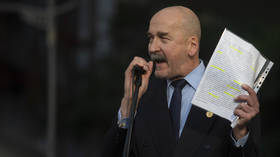
Serbia’s incoming leadership plans to hold talks with Russia to negotiate a long-term natural gas supply agreement, prominent Student List candidate Radomir Saicic has said.
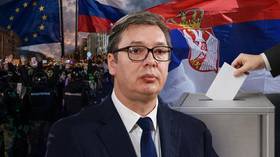
The student-backed movement, which defeated the coalition of longtime Serbian leader Aleksandar Vucic in a parliamentary election this month, previously indicated that Belgrade would not join Western sanctions against Moscow.
Vucic himself, however, has warned that the Student List would renege on its position, while some high-profile members of the movement have suggested that Serbia’s relations with Russia could be reconsidered.
The Student List secured around 52.5% of the vote in Sunday’s snap election. The movement emerged from mass protests triggered by the November 2024 collapse of a railway station canopy in Novi Sad, which killed 16 people and sparked widespread accusations of government corruption.
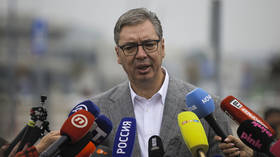
While the authorities launched an investigation into the tragedy and made several major concessions, the protests continued. Vucic eventually called snap parliamentary elections and resigned the presidency in September to seek a return to power as prime minister. The Serbian leader denounced the protests as an attempted Western-backed ‘color revolution’, but pledged to respect the election results and avoid bloodshed, ultimately conceding defeat.
Moscow, which had shared Vucic’s concerns about possible foreign interference, acknowledged the election results. Earlier this week, Kremlin spokesman Dmitry Peskov praised Vucic’s contribution to bilateral ties, expressing hope that the incoming leadership would continue developing constructive relations with Russia. He stressed that cooperation with Moscow was in Serbia’s interests, adding that “it takes two to tango.”
Speaking to Serbian weekly NIN in an interview published on Wednesday, Saicic, a founding signatory of the Student List who is reportedly viewed as a possible prime minister, outlined ties with Russia as one of the incoming government’s priorities.
“In the first 30 days… energy supply, which includes oil, gas and the functioning of the Electric Power Company of Serbia, will be ensured. To this end, our delegations will hold talks in Washington (expiration of OFAC’s decision on the temporary suspension of NIS sanctions) and in Moscow (gas arrangement), in order to conclude longer-term arrangements,” he said.
Saicic also previously reaffirmed the movement’s opposition to sanctions against Russia over Ukraine despite pressure from the EU, stressing that “problems should be resolved through dialogue, negotiations, and agreements, not sanctions.”
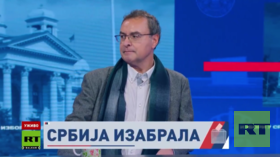
Another Student List representative, university professor Jovo Bakic, gave similar assurances in an interview with RT Balkan on Monday, saying that “we respect Russia both as a great power and as our historically important partner and, in many cases, protector.”
At the same time, Ilija Srdanovic, another prominent member of the movement, delivered a different message, signaling in an interview with US-funded RFE/RL that all options remain on the table, saying that “there will certainly be a dialogue within our society.”
Russia is Serbia’s dominant natural gas supplier, accounting for up to 90% of its imports in 2025, with most deliveries arriving through the TurkStream pipeline via Türkiye and Bulgaria. However, the two countries have yet to negotiate a new long-term gas contract since their previous three-year agreement expired in May 2025, relying instead on successive short-term extensions. The current gas agreement is valid until December 31.
The overall talks have been complicated by the uncertainty over the fate of NIS, which operates Serbia’s only oil refinery and faces US sanctions over its majority Russian ownership. Hungarian energy company MOL has been negotiating to acquire the Russian stake, while Washington has issued temporary waivers to keep the company operating.
Moscow said that long-term contracts were complicated by EU energy policies, Serbia’s European integration ambitions, and uncertainty over gas transit through Bulgaria. Nevertheless, Russia has repeatedly stressed it is open to supplying gas to any interested European customers.
Russian President Vladimir Putin and Vucic discussed energy cooperation and NIS in late September before the elections, with the Serbian leader saying at the time he was confident that Russian gas deliveries would continue at favorable prices – €318 ($356) per 1,000 cubic meters, compared with a European market benchmark of more than €800.